Free search engines like Google Lens and TinEye only search one image at a time, so to reverse image search multiple images at once you need a bulk reverse image search tool that searches every photo in a batch for you.
Step by step
To check a whole shoot or archive with Lenstracer:
- Create a free account. You get 10 credits to try it, with no credit card required.
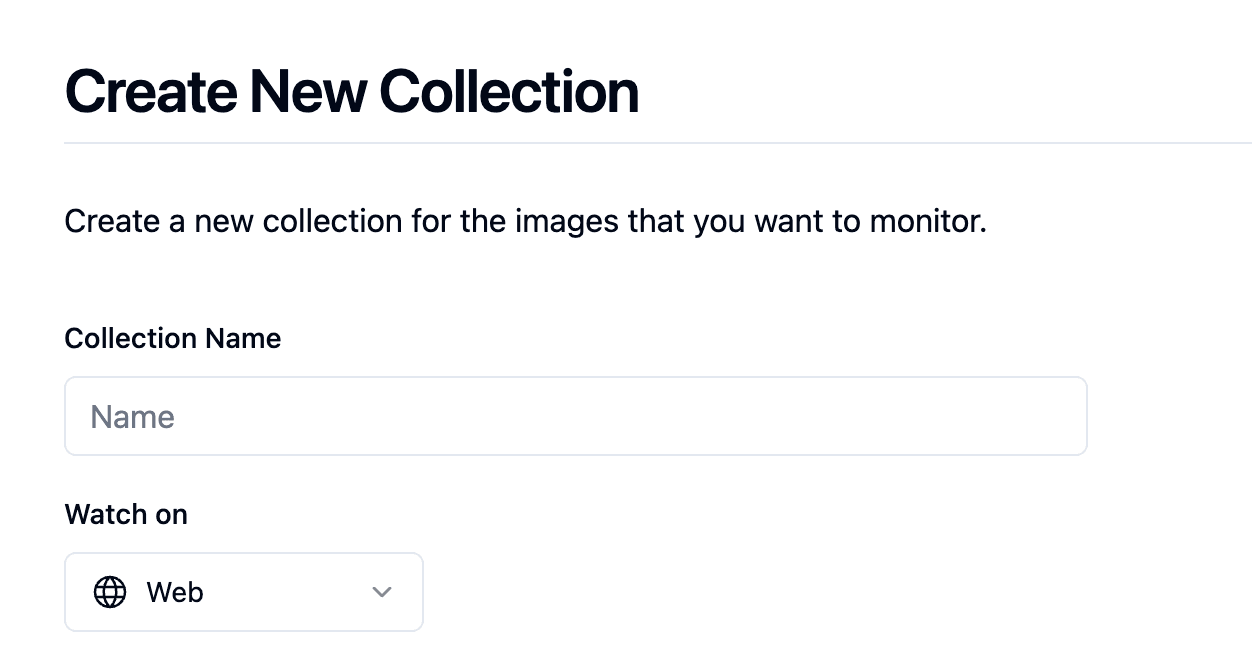
- Create a collection. Give it a name, choose how often to check for new matches and set the match sensitivity.
- Upload your photos. Select multiple images, or upload a whole folder at once.
- Review the results. Lenstracer searches the web for every image in the collection and lists the pages where each one appears.

Can Google reverse image search multiple images?
No. Google Lens and Google Images take one image per search. Google multisearch lets you add text to an image search, but it still searches a single image. TinEye and Bing work the same way.
That's fine for a few photos. For a whole shoot or portfolio, uploading images one by one and noting the results gets slow, which is what batch and mass reverse image search tools are for.
Ways to search multiple images
How the main options compare for searching many images, as of October 2026:
| Option | Images per search | Cost | Ongoing monitoring |
|---|---|---|---|
| Google Lens, Bing, TinEye | 1 | Free | No |
| Multi-engine apps and extensions | 1, on several search engines | Free | No |
| Pay-per-batch tools | Up to about 1,000 per batch | One payment per batch | No |
| Search APIs and bots | Many, set up with scripts or bots | Paid | If you schedule it |
| Commission services | Your uploaded portfolio | A share of recovered fees | Yes |
| Lenstracer | Up to 10,000 per collection | 10 free credits, then from $9.99 a month | Daily to monthly |
Multi-engine apps and browser extensions are useful for checking one image on several search engines at once, but they don't search batches. Commission services monitor your portfolio for free and take a share of any fees they recover for you.
Supported uploads and limits
- File types: JPG and PNG.
- Folders: upload a folder to add every image in it at once.
- Collection size: up to 10,000 images per collection. Split larger archives across several collections.
- Image size: large images are resized before searching, so you don't need to export smaller copies first.
What it costs
Searches use credits. One credit is one image lookup, so searching 500 photos uses 500 credits.
- Free: 10 credits to try it out.
- Monthly plans: from 3,000 to 30,000 credits a month. Credits reset each month.
- One-time top-up: credits that don't reset.
See pricing for current plans. Lenstracer charges for searches only and never takes a cut of fees you recover.
Reviewing your matches
Each image in a collection has its own list of matches, showing the pages where it was found.
- Match sensitivity: choose how closely an image must match. Lower sensitivity finds more cropped or edited copies, and higher sensitivity cuts down on look-alikes.
- Whitelist: add domains you've licensed, or your own sites, to hide their matches.
- Screenshots: keep a record of how a page used your image.
Found an unlicensed use? Read how to respond to image theft.
Monitoring for new matches
A single search only shows where your images are today. Monitoring searches your collection again on a schedule: daily, weekly, every two weeks or monthly. You can also turn it off.
Limitations
- No reverse image search covers the entire internet. Pages behind logins, private accounts and sites that block search engines won't show up.
- Heavily cropped, flipped or edited copies may not be found.
- A match means your image appears on a page. It doesn't tell you whether that use is licensed, so check before you act.
Searching a single image for free
For a one-off check, free search engines work well. Try Google Images, TinEye or Yandex:
- Open the search engine and click the camera or image icon.
- Upload the image, or paste its URL.
- Look through the pages and similar images it finds.
Each search covers one image, which is why checking more than a few photos gets slow.
What is reverse image search?
Reverse image search uses a picture as the query instead of words. The search engine analyses the image's colours, shapes and details, then finds identical or visually similar images on the web.
People use it to:
- Find where their photos are used, and who is using them.
- Find the original source of an image to credit it.
- Check whether a news photo or profile picture is genuine.
- Identify landmarks, products, plants and animals.